



Case Study
Efficacy of Artificial Intelligence in Diabetic Retinopathy Screening
Sarah Johnson, MD, Michael Lee, PhD, Priya Shah, MD

 Whatsapp: +62 823-2131-231
 halo@jonson.org
JOURNAL OF
JONSON is a peer-reviewed, open-access journal publishing high-impact research across all areas of ophthalmology and visual science.
ABOUT THE JOURNAL
We publish high-quality original research, reviews, case reports, and clinical studies that contribute to the understanding and treatment of eye diseases and visual disorders.
Published biannually in February and August, JONSON disseminates original research articles, review articles, case reports, and other scientific contributions relevant to ophthalmology and visual science.
 Open Access – Free for readers worldwidePeer Reviewed – Rigorous and fair evaluationGlobal Reach – Connecting researchers globallyEthical Publishing – Transparency and integrity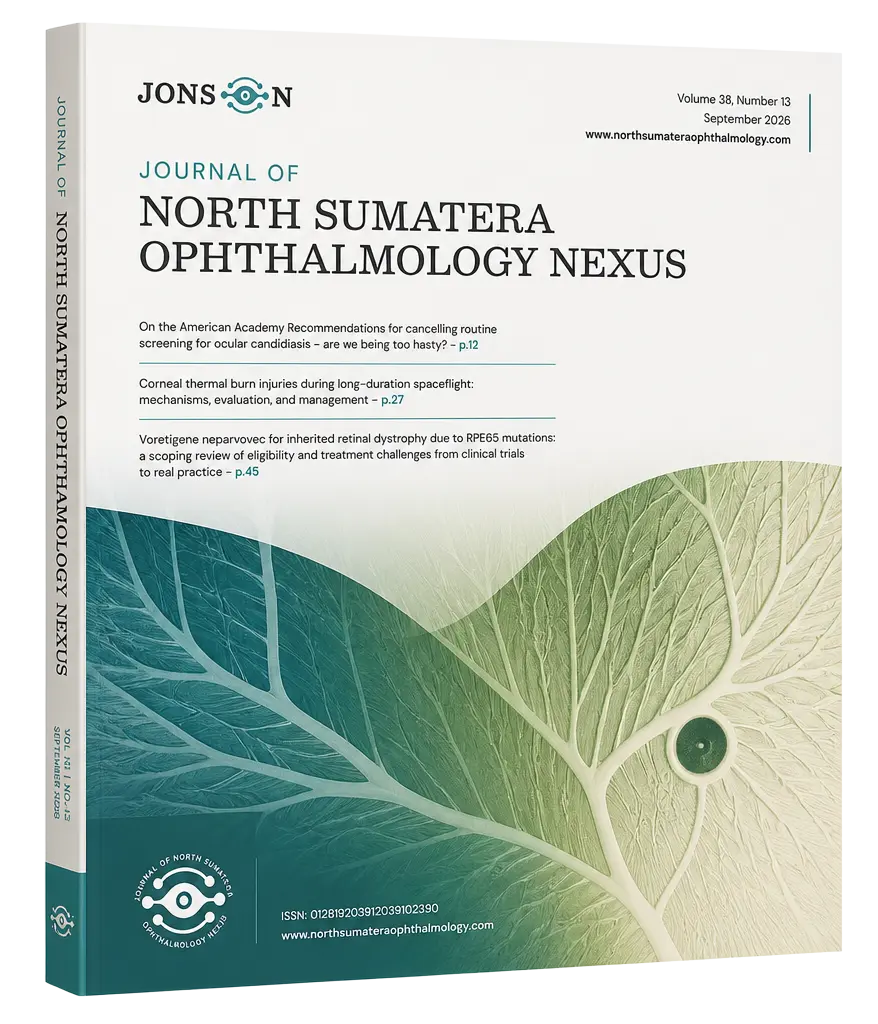
NEW ISSUE
Explore the latest research on retinal diseases, glaucoma, corneal disorders and advanced ophthalmic surgical techniques.
 Submit your journal with usDownload Jonson Journal Template





Sarah Johnson, MD, Michael Lee, PhD, Priya Shah, MD

David Kim, PhD, Amina Yusuf, MD
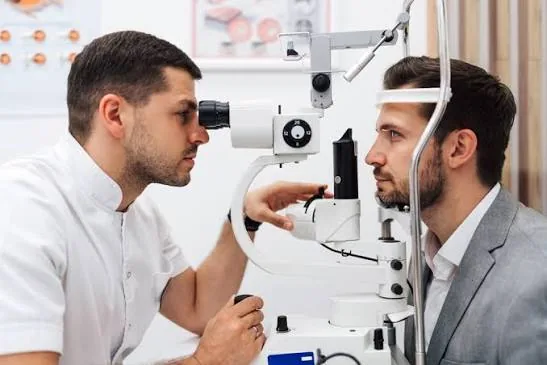
Liam O’Connor, MD, Sofia Martinez, PhD
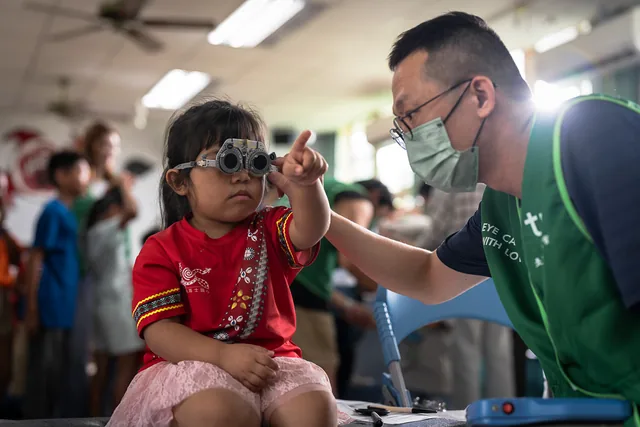
Chen Wei, MD, Fatima Al-Mansouri, MPH

AIMS & SCOPE
JONSON Journal is committed to advancing knowledge in ophthalmology by publishing high-quality scientific research, clinical studies, reviews, and case reports. We provide a platform for clinicians, researchers, and healthcare professionals to share evidence-based knowledge and emerging developments that contribute to better eye care and patient outcomes.
Our scope covers a broad range of ophthalmic disciplines, including anterior segment, cataract and refractive surgery, glaucoma, retina and vitreous diseases, pediatric ophthalmology, neuro-ophthalmology, uveitis, ocular oncology, ophthalmic imaging, and emerging diagnostic and therapeutic technologies.

Your research is visible to a global audience of clinicians, researchers, and vision science professionals.

Our editorial process is efficient, transparent, and committed to maintaining the highest scientific standards.

All articles are freely available, ensuring your research achieves maximum reach and citations without paywalls.
Indexed in Garuda, SINTA, Google Scholar, Dimensions, WorldCat, with long-term preservation standards.
GENERAL SUBMISSION GUIDE
The journal is committed to making published research widely accessible to the ophthalmology community and the public. All articles published by the journal are made available through an open-access model, allowing readers to access, read, and share published research without subscription barriers.
Open access supports the dissemination of scientific knowledge and enables clinicians, researchers, educators, and healthcare professionals to benefit from current developments in ophthalmology.
To support the editorial, peer-review, production, hosting, and long-term preservation of published articles, the journal may apply an Article Processing Charge (APC) to accepted manuscripts.
Current Article Processing Charge: [Insert APC / "No APC"]
Any applicable publication fee will be communicated clearly to authors before publication. Payment of an APC does not guarantee acceptance and has no influence on the editorial or peer-review process.
Authors who are unable to cover the applicable publication fee may contact the editorial office to discuss available waiver or discount options.
To support the editorial, peer-review, production, hosting, and long-term preservation of published articles, the journal may apply an Article Processing Charge (APC) to accepted manuscripts.
Current Article Processing Charge: [Insert APC / "No APC"]
Any applicable publication fee will be communicated clearly to authors before publication. Payment of an APC does not guarantee acceptance and has no influence on the editorial or peer-review process.
Authors who are unable to cover the applicable publication fee may contact the editorial office to discuss available waiver or discount options.
Authors retain the appropriate rights to their work in accordance with the journal's publishing agreement. Published articles are distributed under the journal's designated open-access license.
License: [Insert Creative Commons license, e.g. CC BY 4.0]
Authors are responsible for ensuring that any third-party material included in their manuscript is appropriately credited and permitted for use.
Authors should prepare manuscripts according to the journal's guidelines before beginning the submission process. Following the requirements below helps ensure an efficient editorial and peer-review process.
Manuscripts should:
Authors should carefully proofread their manuscript before submission. Manuscripts that do not meet the journal's basic requirements may be returned to the authors for correction before entering editorial assessment.
Research articles should generally include the following sections:
The required structure may differ depending on the article type. Authors should consult the relevant article-type requirements before submission.
Authors should provide 3–6 keywords that accurately represent the main topics, conditions, techniques, or concepts discussed in the manuscript. Where appropriate, authors are encouraged to use established medical terminology.
Figures and tables should add meaningful information to the manuscript and should not unnecessarily duplicate information presented in the main text.
Each figure and table should:
Patient photographs and other potentially identifiable images must comply with applicable consent and privacy requirements.
References should be relevant, accurate, and complete. Authors should ensure that every reference cited in the manuscript appears in the reference list and that every reference in the reference list is cited in the manuscript.
Authors should follow the journal's required reference style.
Reference style: [Insert reference style]
Authors are encouraged to verify references against the original sources and use persistent identifiers such as DOI where available.
Supplementary materials may be submitted when they provide additional information that supports the manuscript but is not essential to understanding the main text.
Examples may include:
Supplementary materials are subject to editorial review and should be clearly labeled and referenced within the manuscript.
All manuscripts should be submitted electronically through the journal's online submission system.
Before submitting, authors should confirm that:
Depending on the article type, authors may be asked to provide:
The cover letter should briefly explain:
The cover letter should not duplicate the full manuscript abstract.
After successfully completing the submission process, the corresponding author will receive a confirmation and manuscript identification number.
Please retain this identification number for future correspondence with the editorial office.
Guidance for this section is being finalised.
Guidance for this section is being finalised.
Guidance for this section is being finalised.